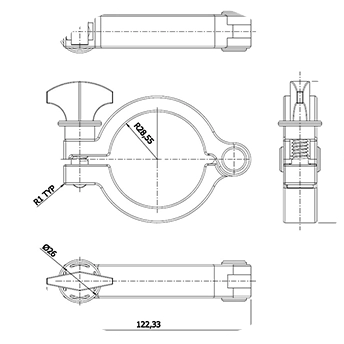


High purity hose fittings are specialised components used in industries where maintaining product purity and preventing contamination are critical, such as pharmaceutical, biotechnology, food and beverage, and semiconductor manufacturing. These fittings are designed to meet stringent cleanliness and hygiene standards and are often made from materials that are compatible with cleanroom environments and sterilisation processes.
Features and considerations for high purity hose fittings
Here are some key features and considerations of high purity hose fittings:
Material Selection
These fittings are typically made from materials with high chemical resistance, low extractables, and minimal particulate generation. Common materials include stainless steel, brass, titanium, and certain plastics such as PTFE (polytetrafluoroethylene) or PEEK (polyether ether ketone).
Surface Finish
The surface finish of the fittings is critical to minimise the risk of bacterial growth, particulate contamination, and fluid adhesion. Fittings may undergo electropolishing, passivation, or other surface treatment processes to achieve a smooth, non-reactive surface with low roughness and high corrosion resistance.
Design and Construction
High purity hose fittings are designed to facilitate easy cleaning, sterilisation, and maintenance. They typically feature sanitary or hygienic designs with smooth, crevice-free surfaces, minimal dead spaces, and easy-to-disassemble components for thorough cleaning and inspection.
Compatibility
The fittings must be compatible with the fluids, gases, and cleaning agents used in the application. Compatibility considerations include chemical resistance, temperature resistance, pressure rating, and compliance with regulatory standards such as FDA (Food and Drug Administration) or USP (United States Pharmacopeia) requirements for contact materials.
Sealing Mechanism
Fittings may incorporate sealing mechanisms such as O-rings, gaskets, or compression fittings to ensure leak-tight connections and prevent fluid or gas leakage.
Certifications and Compliance
Manufacturers of high purity hose fittings may provide certifications and documentation to demonstrate compliance with industry standards and regulatory requirements for cleanliness, material purity, and performance. This may include certifications such as ASME BPE (American Society of Mechanical Engineers Bioprocessing Equipment), EHEDG (European Hygienic Engineering & Design Group), or 3-A Sanitary Standards.
Application Specificity
High purity hose fittings are available in various configurations, sizes, and connection types to suit different applications and system requirements. Customisation options may include different end connections, thread types, hose barb sizes, and angles to accommodate specific installation needs.
Sterilisation Compatibility
In industries such as pharmaceutical and biotechnology, where sterility is paramount, these fittings must be compatible with sterilisation methods such as autoclaving, gamma irradiation, or chemical sterilisation without compromising their integrity or performance.
The role of high purity hose fittings in industry
Overall, high purity hose fittings play a critical role in ensuring product integrity, quality, and safety in industries where maintaining high levels of cleanliness, sterility, and product purity are essential requirements. They are designed and manufactured to meet the rigorous standards and regulatory requirements of these industries while providing reliable and leak-free connections for fluid and gas transfer applications.
Check out Pure Transfer’s range of fittings here.