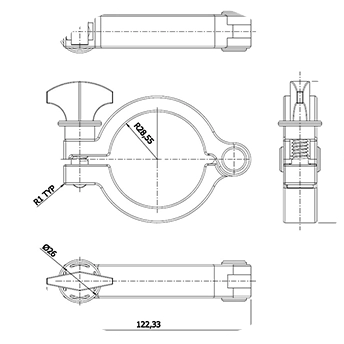


ASME BPE stands for the “American Society of Mechanical Engineers BioProcessing Equipment” standard. It is a set of guidelines and standards specifically developed for the design and manufacturing of equipment and systems used in the biotechnology and pharmaceutical industries. ASME BPE standards aim to ensure the safety, quality, and purity of products and processes in bioprocessing.
Key features of ASME BPE standards
Here are some key points and features of ASME BPE:
Bioprocessing Equipment and ASME BPE
ASME BPE primarily focuses on equipment and components used in the bioprocessing industry, which includes the production of biopharmaceuticals, vaccines, cell therapies, and other biologically derived products.
Hygienic Design
The standard emphasizes the importance of hygienic design principles to prevent contamination, maintain product purity, and facilitate cleaning and sterilization. This includes the use of materials that are compatible with pharmaceutical processes.
Surface Finish
ASME BPE specifies stringent requirements for the surface finish of equipment and components to minimize the risk of product buildup, bacterial growth, and contamination. Smooth and polished surfaces are often required.
Dimensional Standards
The standard includes detailed dimensional standards for components such as pipes, fittings, valves, and tubing to ensure compatibility and interchangeability between different manufacturers’ products.
Material Specifications
The guidelines provide material specifications for components that come into contact with process fluids. Materials must meet specific cleanliness and purity criteria.
Welding Requirements
It outlines welding practices and requirements, including the use of orbital welding, to achieve high-quality and sanitary welds in bioprocessing systems.
Validation and Documentation
ASME BPE emphasizes the importance of validation, documentation, and traceability of components and processes to meet regulatory requirements and quality assurance standards.
Compliance with ASME BPE
Compliance with ASME BPE standards is often required in regulatory frameworks, such as those outlined by the U.S. Food and Drug Administration (FDA) and other global regulatory agencies. Manufacturers in the bioprocessing industry often seek ASME BPE certification for their equipment and systems.
Why the ASME BPE standards are important
ASME BPE is essential in ensuring the quality and safety of bioprocessing equipment and the products produced in the biotechnology and pharmaceutical industries. It helps manufacturers and organizations meet regulatory requirements, maintain product integrity, and minimize the risk of contamination in critical processes.