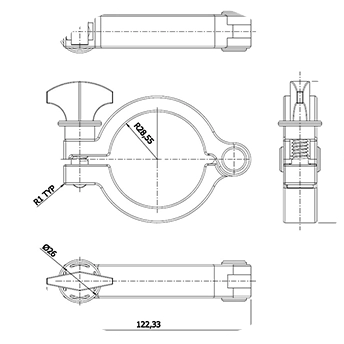


High purity fittings, also know as sanitary fittings, are specialised components used in industries and applications where maintaining a very clean and uncontaminated environment is crucial. These fittings are designed to meet stringent purity and cleanliness requirements, particularly in industries like pharmaceuticals, biotechnology, semiconductor manufacturing, and food and beverage production. They are essential for ensuring the integrity and quality of products in these industries.
Key features and considerations of high purity fittings
Material Selection
Fittings are typically made from materials that are non-reactive and resistant to corrosion, such as stainless steel, alloys, or certain plastics. The choice of material depends on the specific requirements of the application and the compatibility with the substances being transported.
Smooth Surfaces
They have smooth internal surfaces and are often electropolished to minimise the risk of particle entrapment and facilitate easy cleaning. Smooth surfaces help prevent the build-up of contaminants.
Minimal Dead Space
These fittings are designed to minimise dead spaces, which are areas where fluids can become trapped or stagnant. Dead spaces can lead to contamination, so high purity fittings aim to eliminate or reduce them.
Sanitary Design
They often adhere to sanitary design principles, which means they are easy to disassemble and clean. This is particularly important in industries where sterilisation and cleanliness are critical.
Compatibility
Fittings must be compatible with the specific processes, fluids, and gases used in the industry. They should not react with or leach contaminants into the substances they come into contact with.
Tight Sealing
They are designed to provide a reliable and tight seal to prevent leaks, which could lead to contamination or loss of valuable substances.
Standards Compliance
They may comply with industry standards and regulations, such as ASME BPE (Bioprocessing Equipment), to ensure quality and purity.
Where are high purity fittings used?
They are used in various industries:
Pharmaceutical Manufacturing
Sanitary fittings are used in the production of medications and vaccines, where maintaining sterility and preventing contamination are critical.
Biotechnology
In bioprocessing applications, these fittings are essential for handling sensitive biological materials and maintaining aseptic conditions.
Semiconductor Manufacturing
The semiconductor industry relies on high purity fittings for the transport of ultra-pure chemicals and gases used in chip manufacturing.
Food and Beverage
Sanitary fittings are used in the production of food and beverages to maintain product quality and safety.
Laboratory and Research
Sanitary fittings are also used in research laboratories and analytical instrumentation, where precision and cleanliness are paramount.
Why choose high purity fittings
Overall, high purity fittings play a vital role in ensuring product quality, process reliability, and safety in industries where even trace contamination can have significant consequences.
Pure Transfer has a range of high purity fittings on our website.