
We ran a session at a site recently. Mixed group – some people with years of experience, some relatively new to the role.
We were working through a practical exercise. Real components, real connections, looking at what was in service on the line and discussing what we were seeing.
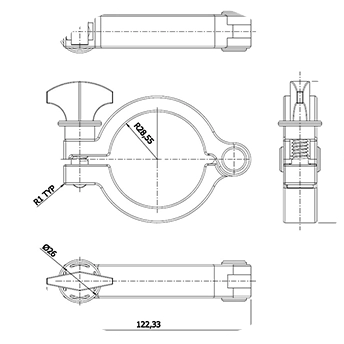
And the person who spotted the most important thing in the room – an overtightened clamp that everyone else had walked past for weeks – was three months into the job.
Three months in. Found what five years of experience had normalised.
Not through superior knowledge. Through the absence of the filter that experience builds – the one that turns warning signs into background noise.
Experienced operators develop a kind of learned blindness to the things they’ve normalised. Not through negligence – through the very expertise that makes them good at their jobs.
When you’ve done something thousands of times, you stop seeing it the way a newcomer does. The thing that was alarming in week one has become background by year five. It happens to everyone.
The experienced operator
- ⟶ Deep technical knowledge of the system
- ⟶ Can work fast and confidently
- ⟶ Has patterns from thousands of repetitions
- ⟶ Has also normalised things that deviated slowly
- ⟶ May not see what they’ve stopped looking for
The newer operator
- ⟶ Still questioning what “normal” looks like
- ⟶ Sees everything against the spec, not habit
- ⟶ Notices things that deviate from expectation
- ⟶ Asks questions that experienced eyes skip
- ⟶ The filter hasn’t formed yet – that’s the value
The mistake is assuming that the direction of learning only runs one way.
“The best session we ran last year wasn’t structured. We went on the floor. Looked at real connections. Asked the team what they noticed. And then listened to what came back.”
The best training environments I’ve worked in have figured this out. They’re not structured as expert at the front, everyone else listening. They’re structured as conversations – where experienced operators articulate things they’ve never had to put into words, and where newer team members ask questions that dislodge assumptions.
Both things are valuable. Both directions of learning need to happen simultaneously.
The knowledge that prevents the next failure usually already exists in your team. It just needs the right conditions to surface.

PTL-U is built around this philosophy. We don’t show up with a slide deck and a checklist of things your team doesn’t know.
We show up to have a conversation – on the floor, with the actual components, in the context of how your site actually operates.
The three-month operator who spotted the overtightened clamp didn’t need more training.
They needed someone to ask them what they noticed.
The knowledge that prevents the next failure is usually already in your team. The question is whether you’ve created the conditions to find it.
The knowledge is already
in your team.
PTL-U – practical training built to surface what your team already knows, and fill the gaps that matter.
Find out more